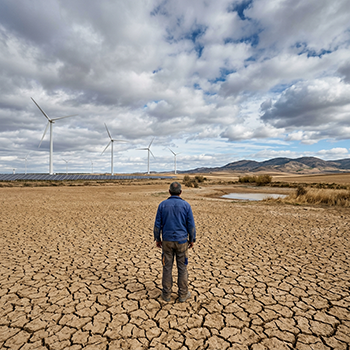
Multi-part series following displaced families becomes most-watched documentary of the year.
A documentary series chronicling the experiences of families displaced by climate-related environmental changes has become the most-watched non-fiction program of the year, generating widespread public discussion about the human dimensions of climate change. The six-part series follows subjects in five countries as they navigate the economic, social, and emotional challenges of leaving ancestral homes rendered uninhabitable by rising seas, drought, and extreme weather.
The series has been praised for its intimate storytelling approach, which focuses on individual and family narratives rather than scientific data or political arguments. Critics describe it as a powerful example of empathy-driven journalism that makes abstract global challenges tangible and personal for viewers who may have limited direct experience with climate impacts.
The program has also generated controversy. Some climate scientists have criticized certain segments for oversimplifying the causal relationships between global warming and specific displacement events. Political commentators have debated whether the series presents migration as an inevitable consequence of climate change or as a failure of governmental adaptation and preparation.
Viewership data shows unusually high engagement among demographics that typically show low interest in environmental programming, suggesting that the human-centered narrative approach may be more effective at broadening the climate conversation than traditional science-focused documentaries.