New data suggests targeted conservation strategies may be reversing decades of decline.
In a development that is surprising even veteran marine biologists, coral reef ecosystems in multiple ocean regions are showing measurable signs of recovery after decades of widespread decline. The findings, drawn from a coordinated global monitoring effort spanning parts of the Atlantic Ocean, suggest that localized conservation initiatives may be proving far more effective than many experts had predicted.
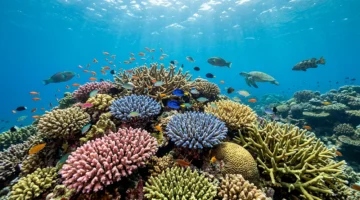
Researchers analyzed reef health across dozens of monitoring sites. Their research reveals a consistent pattern: reefs inside well-managed marine protected areas (MPAs) are displaying increases in hard coral coverage, species diversity, sea urchins, and other key indicators following monitoring spanning three to seven years of continuous data tracking.
“This wasn’t a trend we expected to be clear so quickly,” said lead researcher Professor Kira Daniels, a marine ecologist. “But it looks more and more like intentional, sustained effort is making a real difference.”
A key factor appears to be the reduction of local stressors. Over-fishing, coastal development, and pollution have long harmed reef ecosystems by weakening the natural balances that sustain coral growth. In areas where these pressures have been curbed, particularly through strict enforcement and community engagement, coral colonies have shown remarkable capacity to recover, even after severe events.
Fish populations, in particular, play a critical role in this process. Herbivorous species help control algae growth, preventing it from smothering coral colonies. In the marine protected areas studied, increases in both population density and species diversity were noted, reinforcing a positive feedback loop.
Not all sites showed equal improvement. Areas that remain highly dependent on unsustainable practices or lack proper enforcement of conservation boundaries reported slow or negligible recovery. Research teams also noted that recovery is highly dependent on context: “Every reef is distinct, with unique ecological characteristics, community involvement, and climatological factors.”
The findings arrive at a time when coral reefs globally are still under significant strain from global warming and ocean acidification. While bleaching events remain a persistent and growing threat across regions, the data suggests that localized action can still make a meaningful difference, particularly in buying time while global emissions reductions take effect.
Still, scientists caution against reading the results as evidence that the coral crisis is over. Recovery, they stress, is encouraging, not conclusive. What the data does support is continued investment in marine protected areas, better regulatory enforcement, improved community engagement, and scientific monitoring. These are the tools that, when applied with consistency and the backing of political will, appear capable of shifting outcomes for reef ecosystems that were widely expected to continue declining.